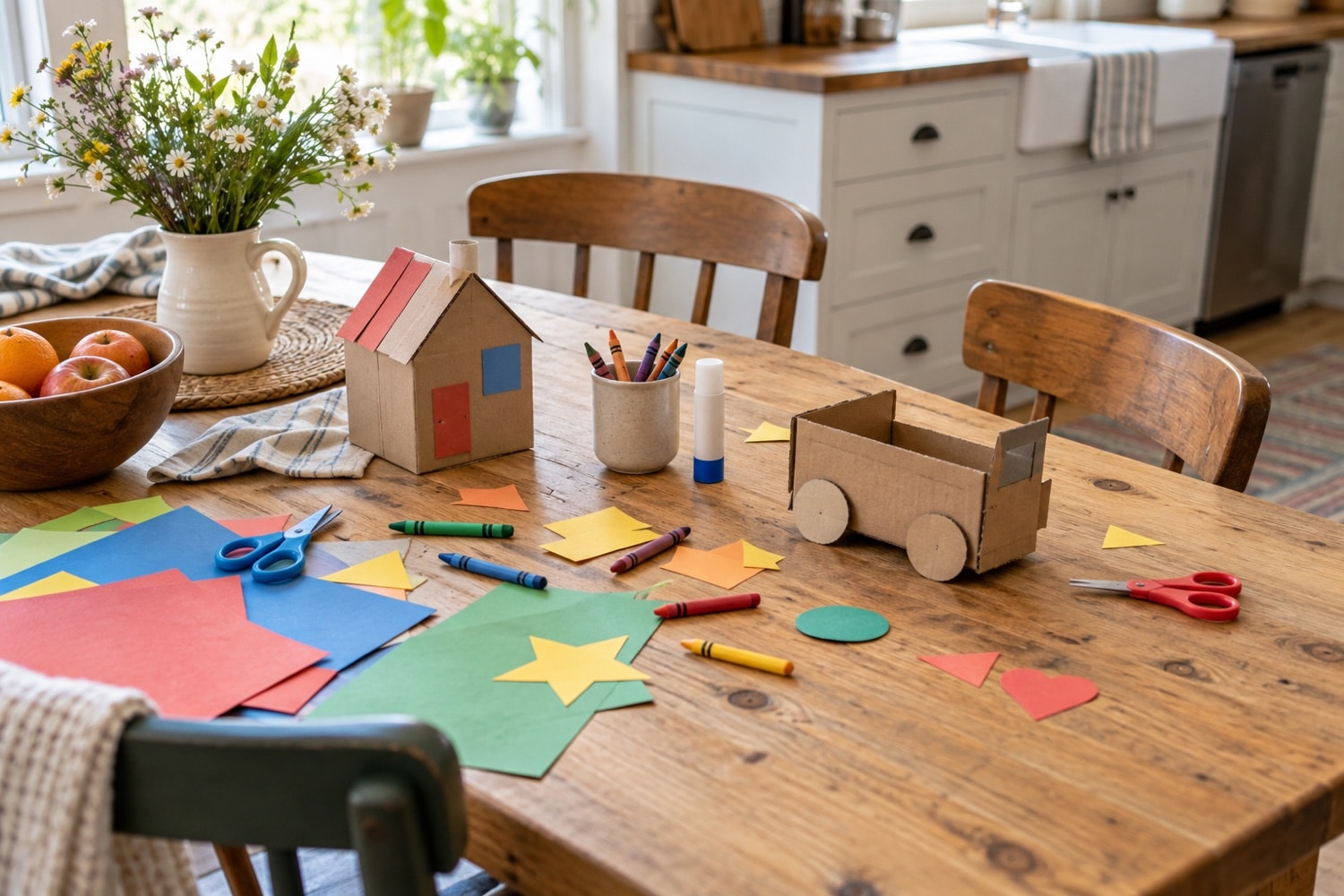
Choose for the people, not the picture
A good shared activity fits the time, attention, budget and physical access of the people present. Start with something that can be paused or finished in one sitting. Keep the number of materials small, especially with children or a group that is new to the activity.
The attractive example is not the standard everyone must copy. Offer it as one possibility. Let color, shape and method differ unless a step is important for safety or function.
Teach without taking over
Ask before correcting. A learner may want a demonstration, a verbal hint or time to work it out. Show one step at a time, then return the object. Finishing the difficult part for someone can remove the satisfaction they were seeking.
With children, describe what you notice rather than grading the result. “You used three layers there” invites conversation. “That is the best one” can turn a relaxed activity into comparison. Adults also appreciate being allowed to be beginners.
Make participation flexible
Not everyone wants to make the same object. One person might sort colors, prepare materials, take photographs with permission or simply sit nearby. Adapt tools and table height when dexterity, vision, mobility or fatigue affects participation.
Breaks are ordinary. A long project can live in a labelled tray or box so the workspace can return to daily use. Agree before leaving supplies in a shared room.
Low-pressure ideas across ages
- Create a seasonal table arrangement from garden leaves, fallen twigs or household objects.
- Make simple cards for occasions, keeping any message private to the maker.
- Sort and label family photographs together, letting people decline to discuss a memory.
- Repair or decorate a plain household container instead of buying special supplies.
- Start a jigsaw, simple hand-sewing project or shared sketchbook that can be revisited.
Supervise tools and materials according to the people involved. Check suitability rather than assuming a craft labelled for an age will fit every child or adult.
Supplies, cost and clutter
Hobbies can quietly expand. Decide where materials live, what amount of shared space is available and when unfinished projects will be reviewed. Use what is already in the home before treating shopping as part of the activity.
When supplies belong to one person, ask before borrowing or reorganising them. A drawer that looks chaotic may contain a system the owner understands. Shared space still needs agreed limits, but changes should not be a surprise.
Hobbies as friendship, not obligation
A regular craft evening, garden task, walk or game can give friends a dependable reason to meet. Keep attendance easy to decline. If the activity becomes a source of pressure, change the schedule or allow people to come for company without producing anything.
Skill differences need not become hierarchy. Invite the experienced person to teach only if they want that role. Everyone should still have room to enjoy their own project.
Preserve the meaning carefully
Handmade objects can carry family memory, but nobody can keep everything. Before discarding or passing on an object, ask the owner when possible. A photograph and a short note may preserve the story when the item itself cannot be stored.
If a project is meant as a gift, agree on the deadline and the amount of help wanted. A handmade gift does not need to justify the time spent on it, and the recipient should not be required to display or keep it forever.
Do not share images of a child, another person's work or a private home without permission. The quiet value of making together does not depend on a public audience.