Write down the useful details
A family recipe may live in phrases such as “until it looks right” or “the usual pan.” When passing it on, record the ingredients, approximate quantities, pan size, order of steps and the signs that show each stage is ready. Note which parts are flexible.
Preserve the story separately from the instruction. A few lines about when the dish appeared or who enjoyed making it can be meaningful without turning one version into the only acceptable version.
Plan for the week you actually have
Meal planning works best when it includes time, energy, budget and who will be home. Choose a mix of meals with different levels of effort. Leave a night for leftovers or a simple standby rather than pretending every evening will unfold as planned.
Before shopping, check what is already available and which ingredients need using. Keep the list visible to the people who share responsibility. If one person plans, shops, remembers preferences, cooks and clears up, the meal is not truly a shared task.
Cook together without taking over
Give each person a complete, understandable job. “Prepare these vegetables” is clearer than stepping in every few seconds to correct the method. If a technique matters for safety, explain it before starting and choose an age-appropriate task.
People learn at different speeds and may use different tools because of strength, mobility or confidence. An accessible setup is not a shortcut. It is part of making participation possible.
Welcome preferences without running a restaurant
A household can respect dislikes, cultural practices, allergies and other needs while keeping the work manageable. Discuss which needs are fixed and where people can assemble their own plate from shared components. Children may need repeated low-pressure exposure to unfamiliar foods, but mealtimes should not become public battles over character.
Medical questions about food, allergies, pregnancy, growth or nutrition belong with an appropriate clinician. A family recipe page cannot decide what is suitable for an individual.
Three flexible meal patterns
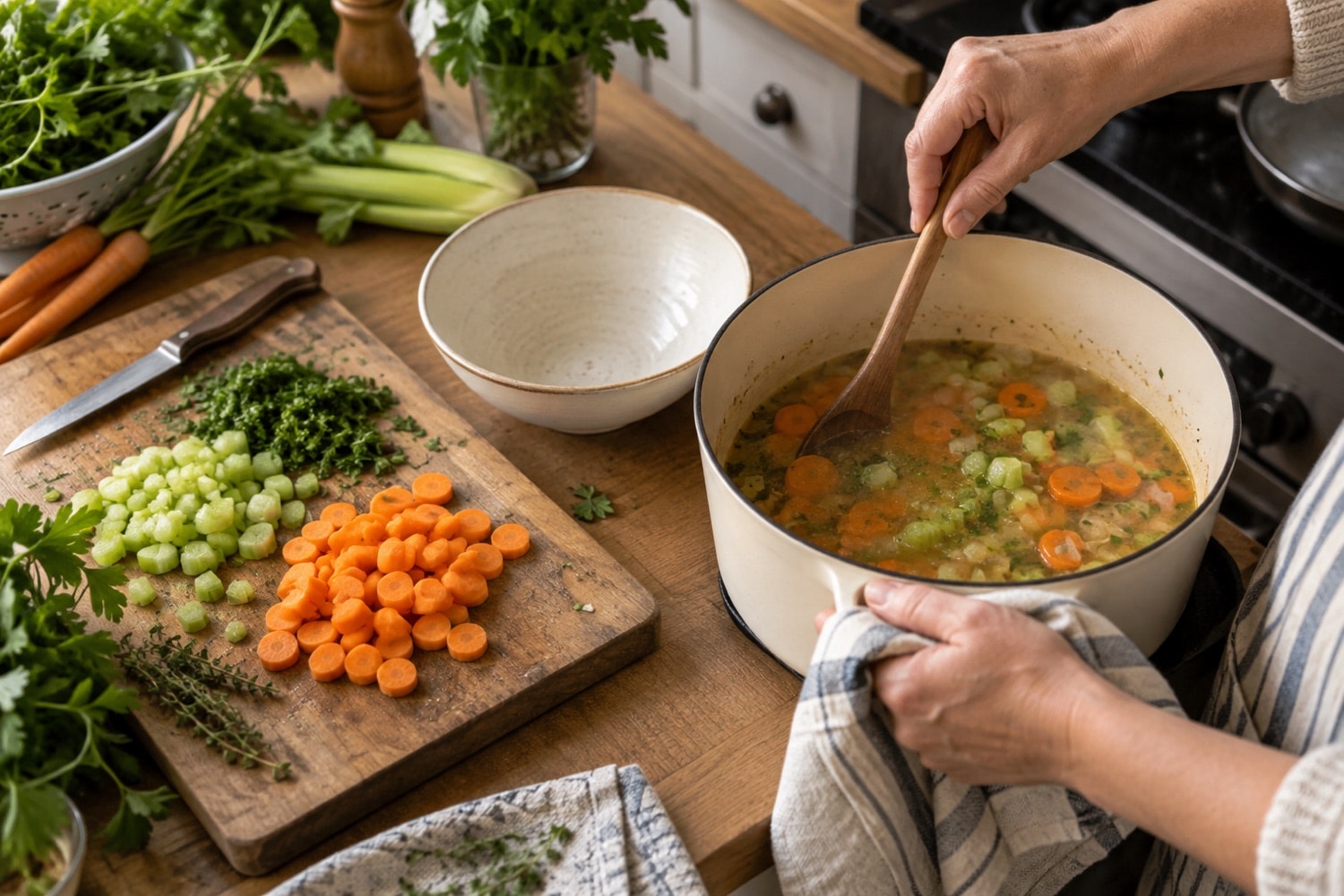
A pot of soup
Begin with the vegetables and seasonings your household already uses, add a familiar liquid base, and choose beans, grains or another ingredient that fits the meal. Write down what you changed so a successful combination can be repeated. Follow safe preparation and storage guidance appropriate to the ingredients.
A tray of separate parts
Roast or prepare several compatible vegetables and other components so people can combine them at the table. This can make different preferences easier to manage without cooking entirely separate meals.
A use-what-is-there supper
Choose a base such as rice, pasta, bread or potatoes, then add cooked vegetables and other available components. Treat it as a practical category rather than a fixed recipe. Check that ingredients have been stored safely and are suitable to use.
When food carries emotion
A declined dish may feel like rejection of the person who made it, especially when the recipe is tied to family history. Try to separate taste from gratitude. Someone can appreciate the work and still not want the food.
Celebrations can make this harder. Agree in advance which traditions matter most, what can change and who will do the work. One familiar dish may carry the memory without requiring a single cook to reproduce an entire past.
Share the clean-up
Cooking does not end when food reaches the table. Include clearing, storing leftovers, washing up and resetting the room. Rotate the less popular jobs or pair them with the person who did not cook. Clear ownership prevents “helping” from meaning waiting to be directed.